Why magnetic gears?
A short background on gearboxes and magnetic gears, for the magnetic gear projects on this site.
Why do we use gearboxes?
The most important metrics of an electric machine are generally proportional to its torque rating, rather than its power. The main ways to increase the torque are to supply more current or to make the machine bigger, and both come with increased cost.
For high torque, low speed applications, a gearbox allows a smaller, lighter, cheaper high speed machine to be used in place of a larger and more expensive direct drive machine. Mechanical gearboxes have some issues that stem from the interlocking teeth: acoustic noise, no overload protection, and lubrication and maintenance.
From teeth to magnets
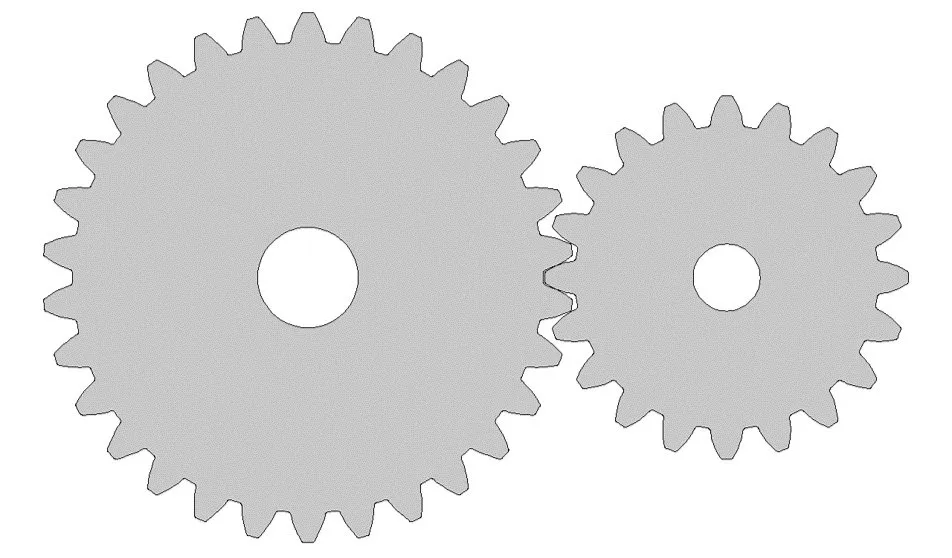
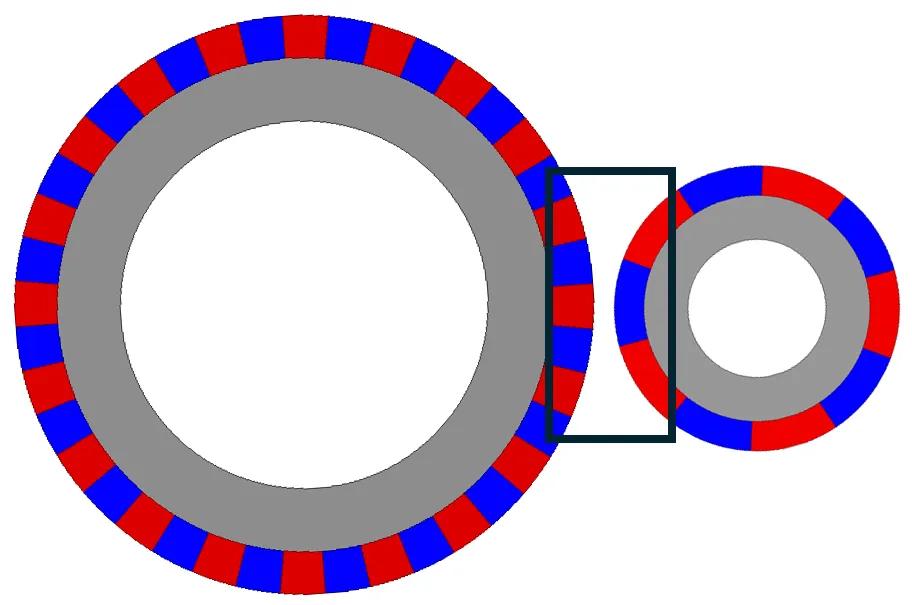
A traditional spur gear works by its teeth interlocking with one another (Fig. 1). To make a magnetic equivalent, the logical step is to replace the teeth with permanent magnets of alternating polarity (Fig. 2). The problem with this design is that the only magnetic interaction is inside the black rectangle. The magnets on the far sides of both gears are not interacting at all, so when these gears have been built and tested their performance has been very poor.
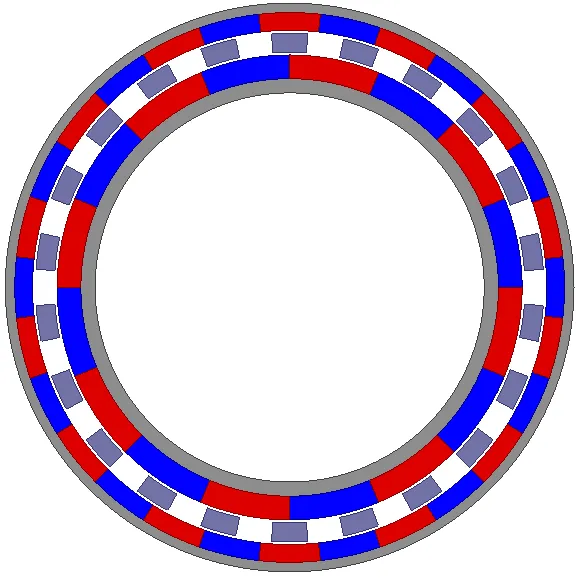
A solution is to place the smaller gear inside the larger gear and add a ring of ferromagnetic blocks between them (Fig. 3). This is called a coaxial radial flux magnetic gear, and it is the most prevalent magnetic gear design in research.
Benefits and drawbacks
Since there is no physical contact between "teeth", magnetic gears come with a wide array of potential benefits:
- Increased efficiency
- Higher reliability
- Lower acoustic noise
- Built in overload protection
But there is no such thing as a free lunch. They currently cost more to produce, and with the current materials (both the magnets and the ferromagnetic parts) it is hard to get the same performance as mechanical gears. It is important to remember that mechanical gears have been around for hundreds of years, while magnetic gears are only around 30 years old.
Types of magnetic gears
Magnetic gears, just like mechanical gears, come in many different types (usually called topologies). There are the magnetic spur gear and the coaxial magnetic gear above, but also cycloidal magnetic gears, magnetic screws, transverse flux magnetic gears and others.