Wound field synchronous motor
A wound field synchronous motor whose field winding also serves as the DC-link inductor of its current source inverter drive.
Current source inverters (CSIs) have significant advantages over conventional voltage source inverters for motor drives, such as reduced electromagnetic interference, reduced voltage overshoot and better resilience against short circuits. The drawback is the DC-link inductor that a CSI needs, which adds significant mass and losses. In this project we used the field winding of a wound field synchronous motor as that inductor.
Work
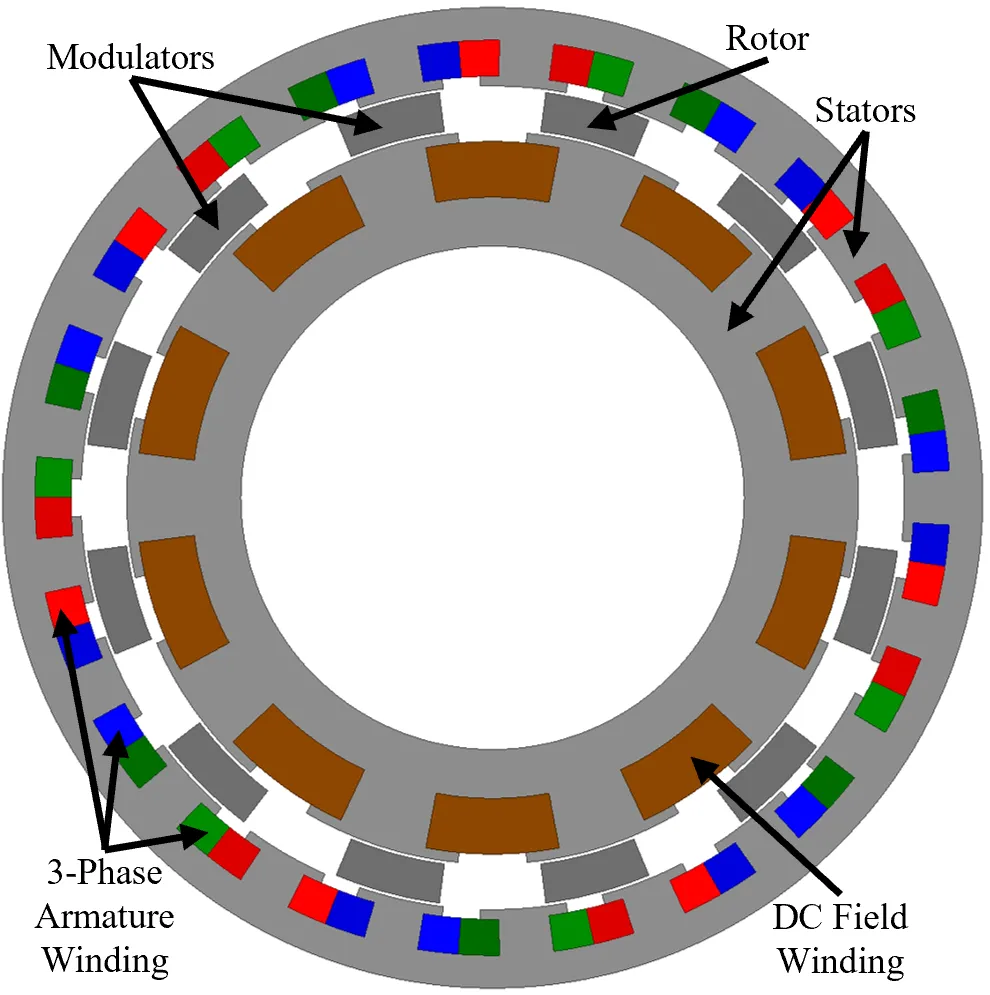
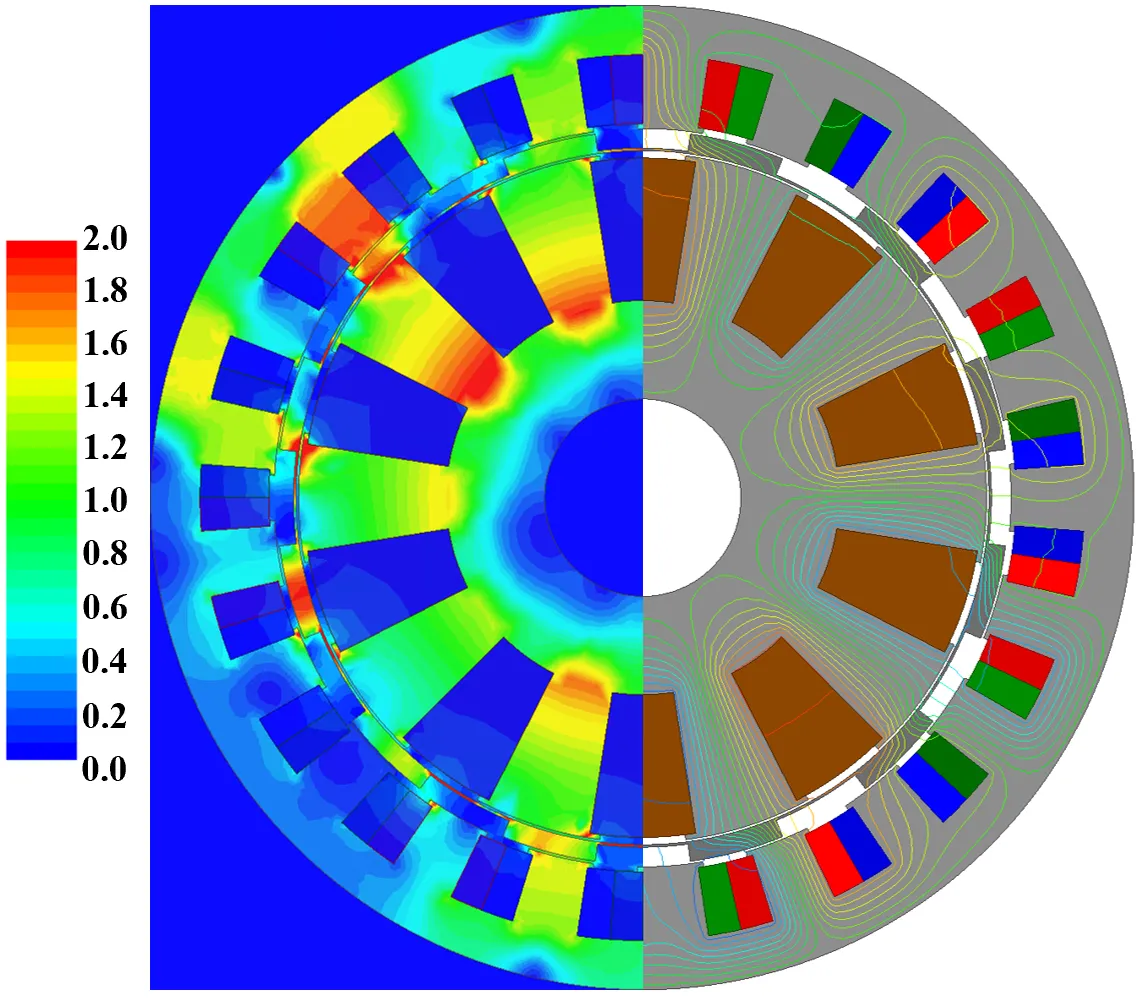
- Compared four wound field motor topologies that keep the field winding stationary, and selected a radial flux dual stator modulation motor. The field winding is on the inner stator, the armature winding is on the outer stator, and a rotor of ferromagnetic modulators turns between them (Fig. 1)
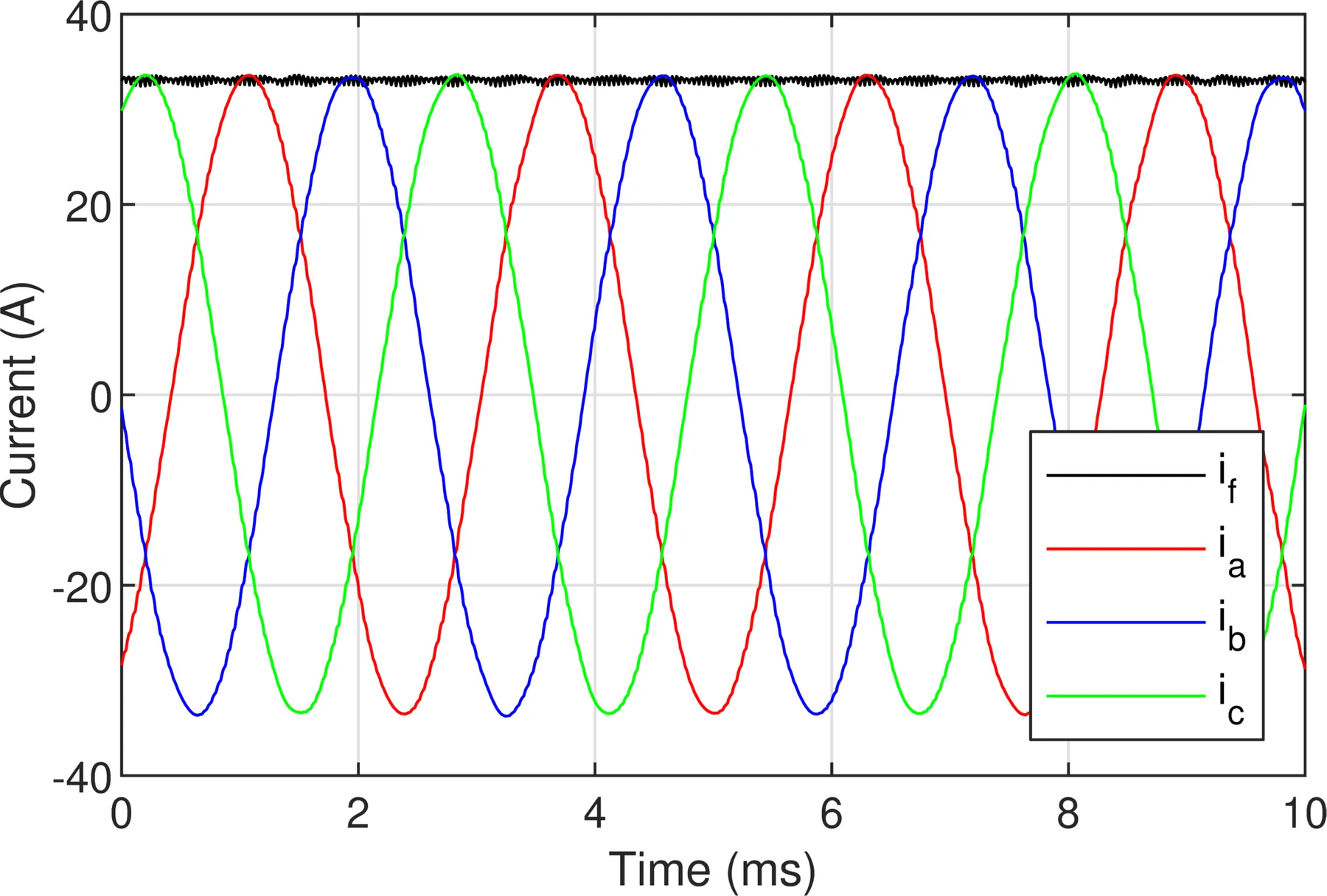
- Simulated the motor and the CSI together in Simulink
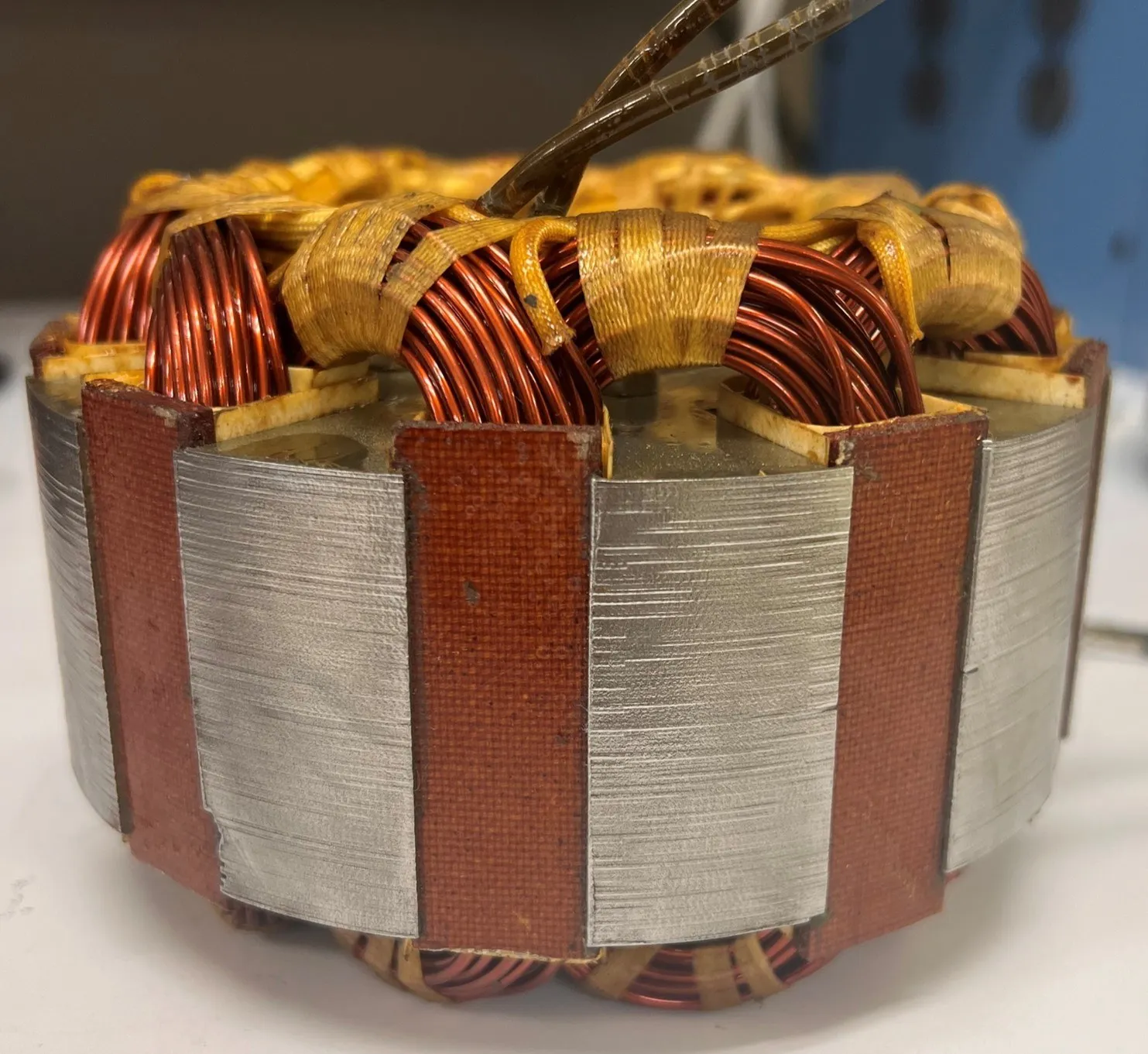
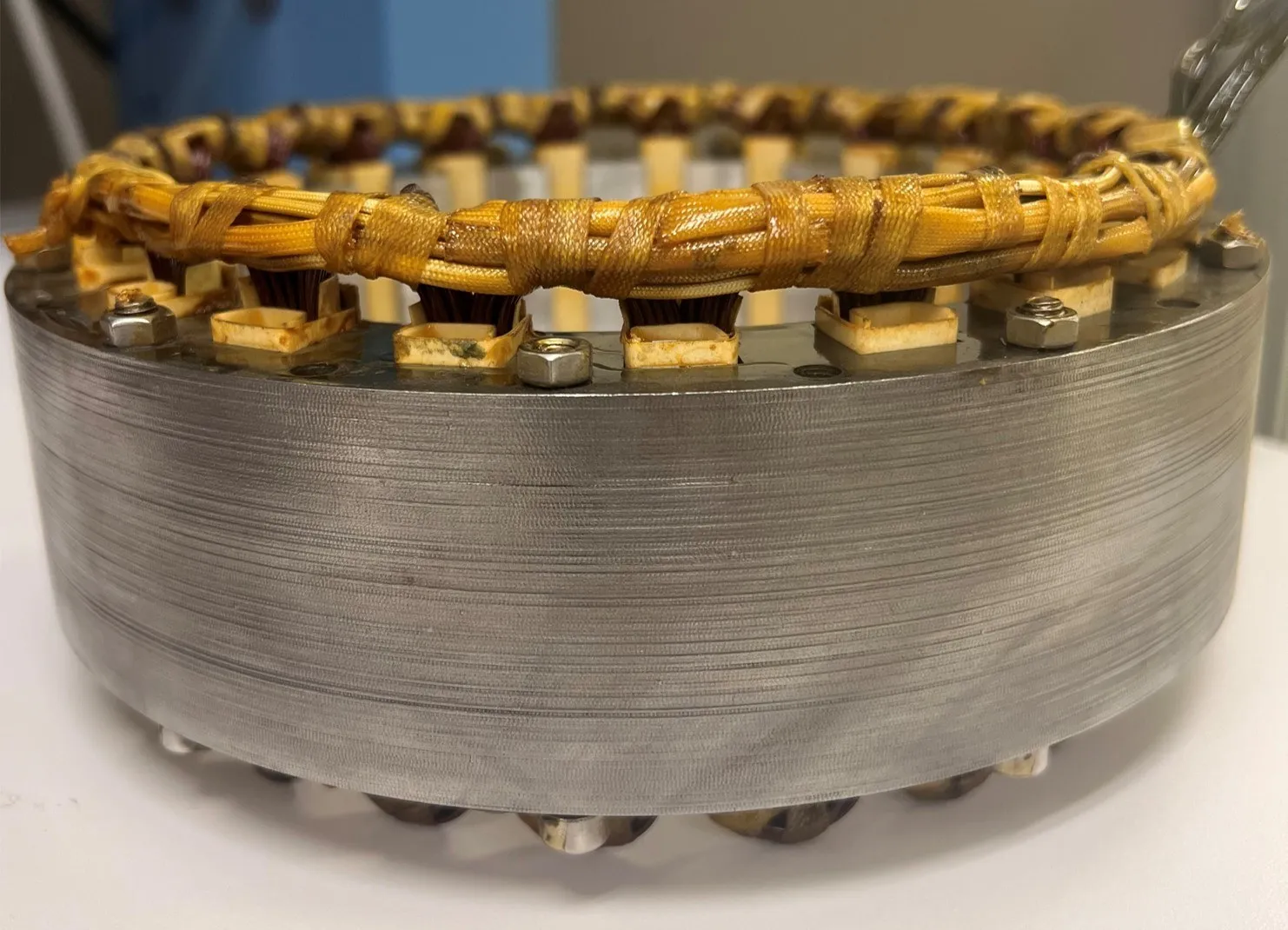
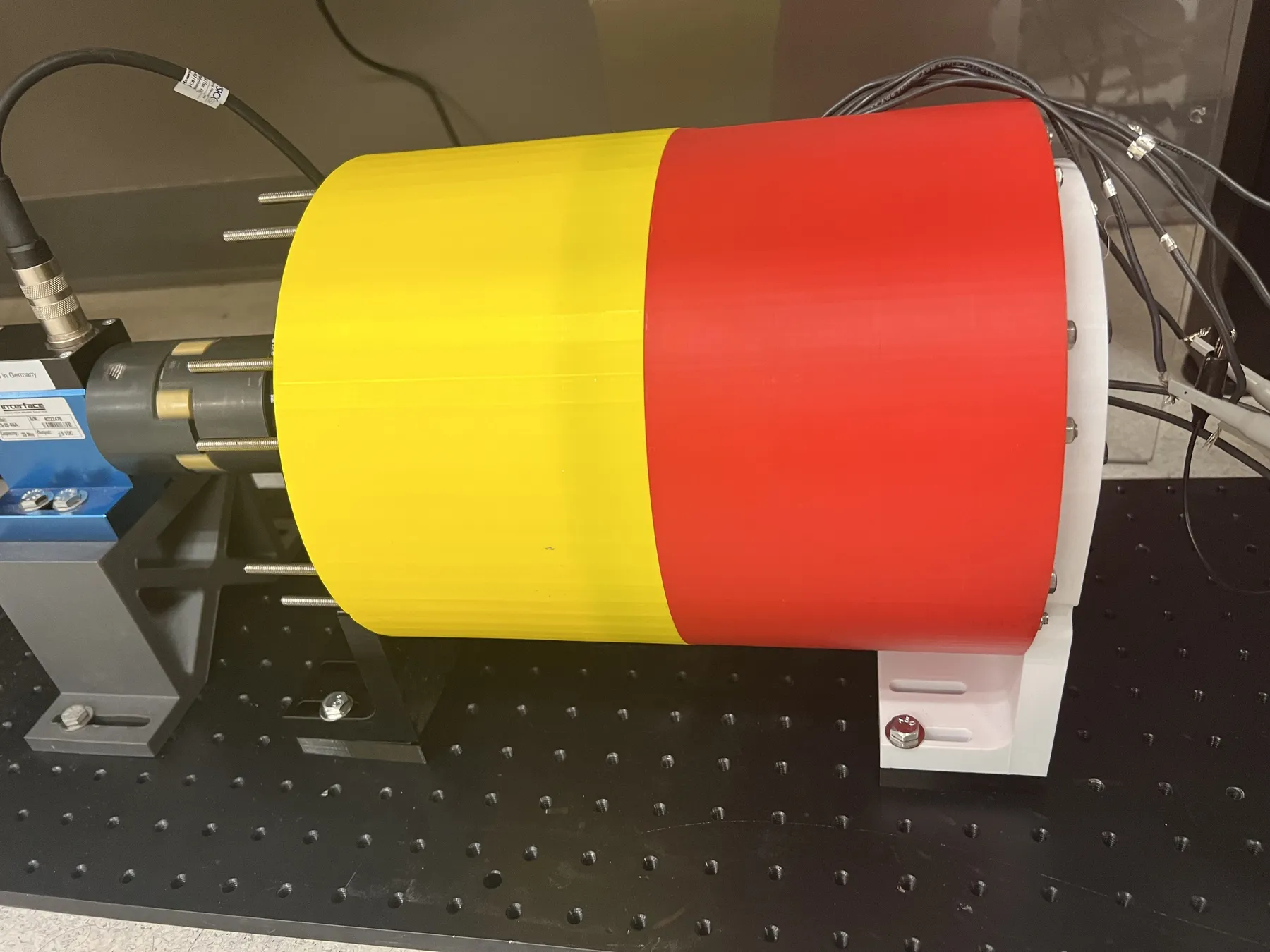
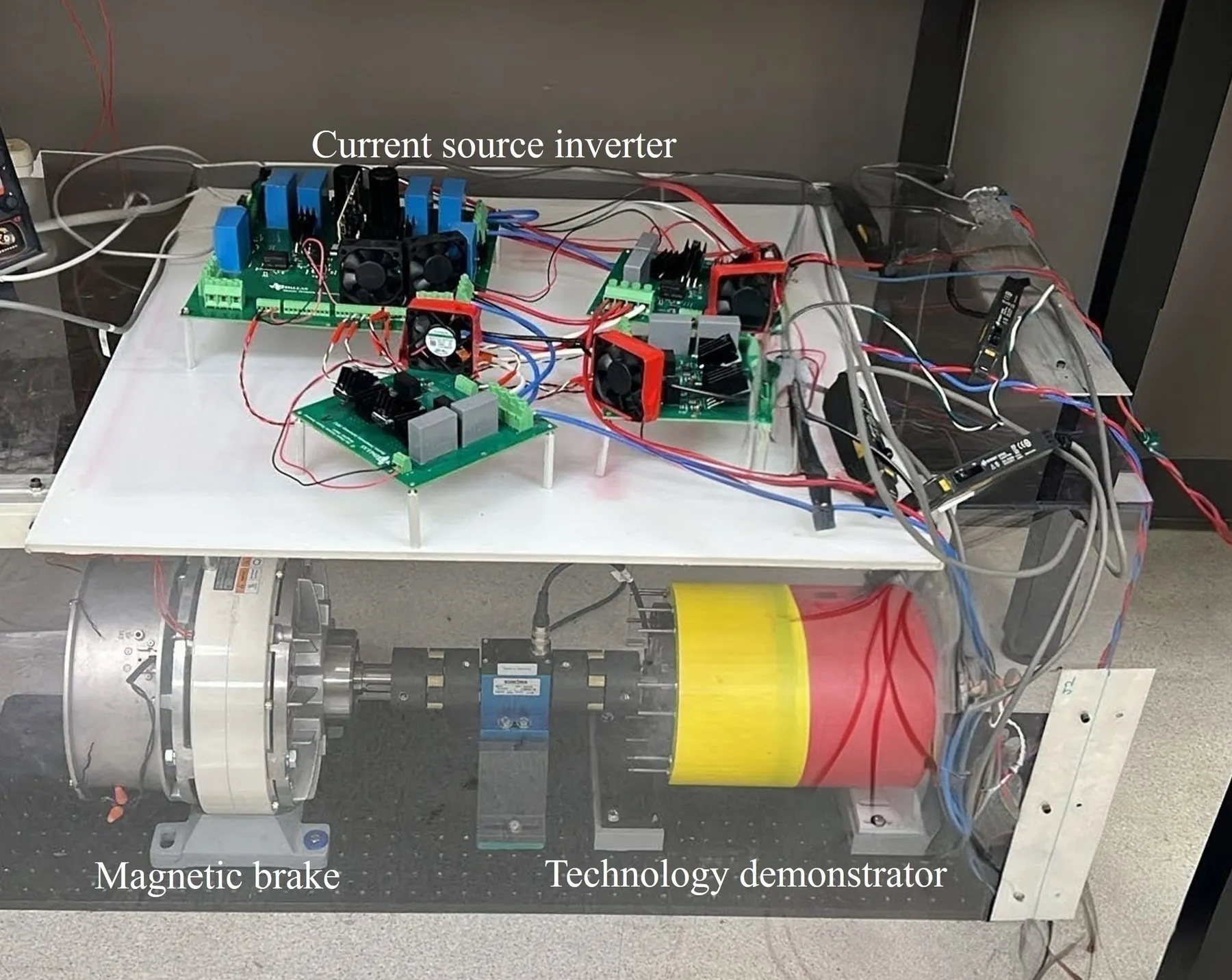
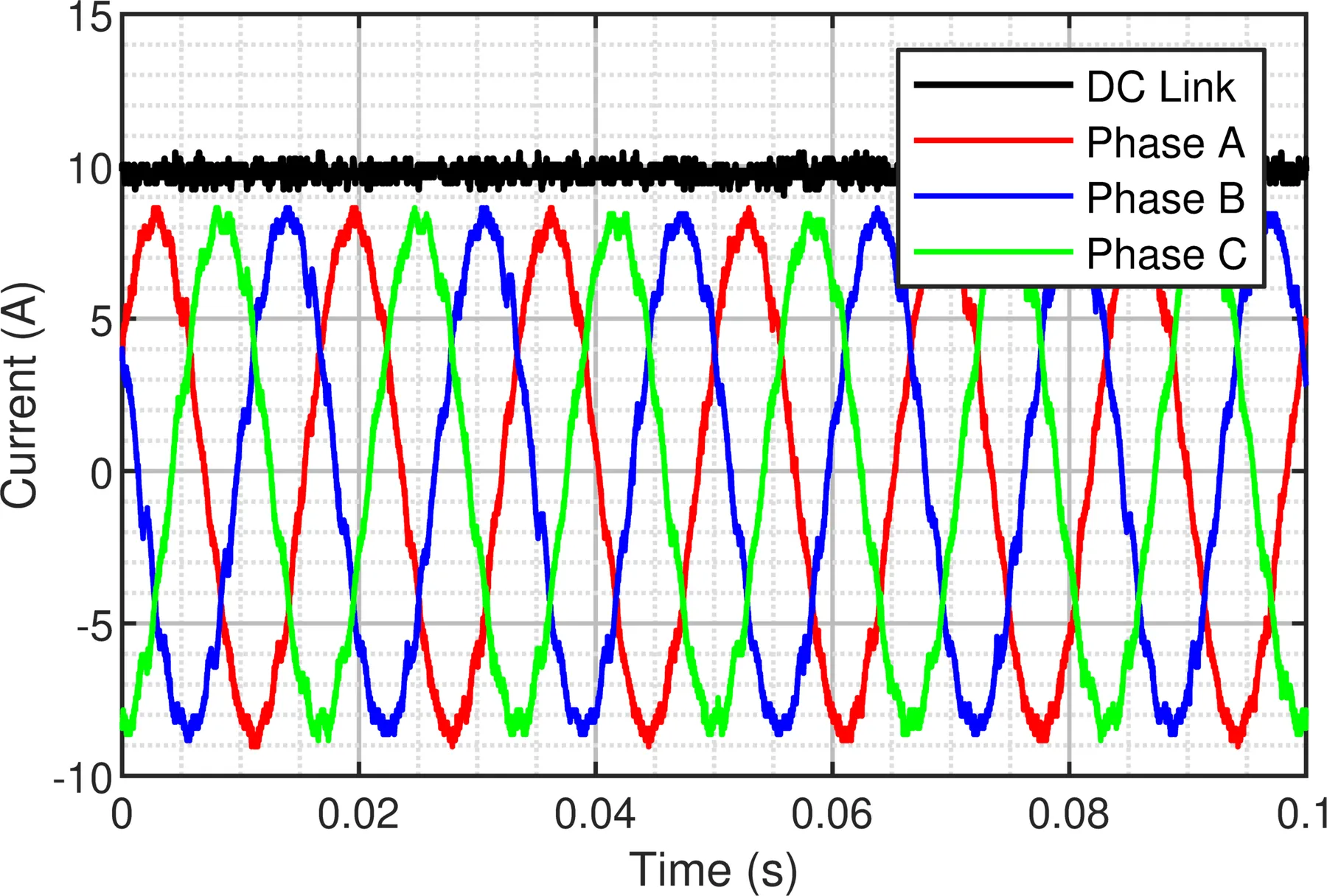
- Built and tested a technology demonstrator to validate the models (Fig. 3 to Fig. 6)
Results
- In simulation, the armature phase currents had a THD of 1.1% and the field current ripple was 3.9% peak to peak, with only 1 µF of filter capacitance on each phase and a 25 kHz switching frequency
- On the technology demonstrator, the phase current THD was 6.3%
- Once friction was accounted for, the simulated and measured torque and back-emf agreed to within 13%
Limitations
The field current has to stay above the peak armature phase current. This makes the usual way of getting a constant power region in a wound field motor, reducing the field current, impractical. The paper describes two other ways to get one, but they have not been evaluated yet. Many of the structural parts of the demonstrator were 3D printed in plastic, which limited its rated speed to 300 RPM.
Papers
- A Current Source Inverter Motor Drive with DC-Link Inductance Integrated into a Wound Field Synchronous MachineIEEE J. Emerg. Sel. Topics Power Electron., 2026IEEE XplorePDF
Some figures on this page are from these papers. © IEEE.